The Value Of 1 Rupee


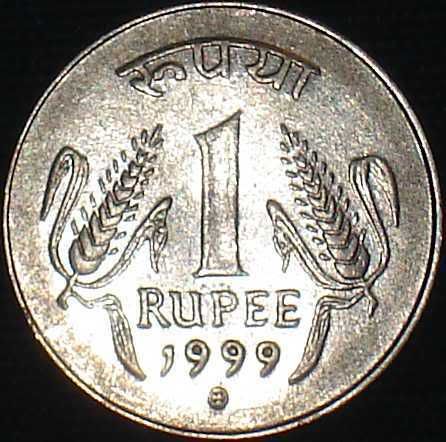
Re 1 doesn't seem to have much value these days. Beggars re-beg at me when I give them a  1 Rupee Coin, the bus conductor no longer deals with odd numbers for change and the price of a half coffee got upped from Rs.5/- to Rs.6/-, Rs.8/- or Rs.10/-

But there is one object that still stands tall in the land of the 1 Rupee Coin - The Matchbox.


The matchbox stands tall as probably THE commodity that provides the most value for money in the Indian market. Densely packed, there are at least 30 matchsticks in a matchbox! I am regularly asked to procure these for my smoking friends and the amount of value 1 matchbox brings never ceases to amaze me. Fire, being one of mankind's greatest friends finds its origin in modern life largely with the matchbox. Smokers use its contents to light cigarettes, slum dwellers to light their kerosene lamps and EVERYBODY uses them to bring light during blackouts.

Is 1 Rupee really that invaluable?

Overthinking


"Over thinking, over analyzing separates the body from the mind.
Withering my intuition, missing opportunities and I must 
Feed my will to feel my moment drawing way outside the lines."

..sang Maynard James Keenan in a song touted as the greatest metal song of the 21st century...

I disagree

I've been accused of over thinking many times in my life (and believe that people's accusations are true) but I've grown to realize that life would probably worse off without "over thinking". Sure I've made mistakes, but it is the same over thinking that probably led Einstein to develop his theory of relativity, the Buddha to come up with Buddhism or even tech geeks to write better code with a constant quest for "more".. its also the same cold hard belief in logic that urges a person to look for answers while navigating the far reaches of one's own soul and not give in to temptations along the way. Ask any addict.
Most people however don't seem to have a problem with that. Issues arise when dealing with thinking about seemingly mundane things - why are there small brush like things on escalators, why a phone call or text message wasn't returned or why a special friend dumped someone.

Here's the deal with thinking. Its fundamentally a judging function used to judge, conclude or resolve. When the end of a train of thought is usually a conclusion how can one over overdo it? The problem lies not in over thinking rather in incorrect thinking.

Over thinking is usually plain to see when the explanations needed to propose a conclusion seem to loop around one another or extend outward in ever increasing possibilities seemingly leading nowhere. 

In that case:

1. Examine your premises - you've assumed something wrong
2. Take no prisoners - retrace all your trains of logic
3. Most importantly, have the courage to say "I don't know"- Insufficient information in my experience is the most common cause of the disease of  "over thinking"

Coming back to Maynard James Keenan, thinking and analyzing are powerful tools we need to make our lives happy. When used well they bring clarity, a sense of sureness and stability that intuition or feeling can never provide. Every human being needs peace of mind and security before he can explore his or her feelings and intuitions.

Look at the chair you are sitting in, the clothes you are wearing or the communication device you are reading this from. You need to thank somebody's obsessive thought process for bringing them to you. The manager's drive to constantly improve the supply chain to reduce costs, the retailer's to increase sales and even your accountant's who strives hard to see that you have money to procure these things. Sometimes, over thinking could even kick in powerful unconscious intuitions leading to major discoveries as when Kekule discovered the structure of Benzene!

I believe that over thinking, is under rated.

Bring Me The Drugs


According to modern science, this is all there is to life. Is this the right direction??
Courtsey: 9gag.com

Pay Your Bills

As a little kid I was always amazed by crowds. The hustle and bustle of people walking about, busy and full of purpose always enthralled me.

"What could they be so busy about?"

But my biggest question was - "If all these people got their minds together to end the world's problems - cancer, aids, climate change, religious intolerance - won't at least one of them be able to come up with the solutions?"

But now I ask myself - What are YOU doing??

An unverified story about Manmohan Singh


I recently heard an unverified story regarding our current Prime Minster Dr.Manmohan Singh which seemed pretty amazing (my friend could've been making it up as well, but that I somehow doubt!).

It was in the 90's that a conversation between a reporter and Dr.Manmohan Singh went something like this

Reporter(R): "Sir, how would you reduce corruption in India"

Manmohan Singh (MS)(promptly): "There are 5 ways"

R: "Could you share them with us please?"

MS: "Yes, I would change the currency"

.. and the man apparently slowly walked away... Changing the currency with a 1:1 conversion ratio would necessitate all the black money to get converted to white money by exchanging it with the central bank if it were to have any value. This money would HAVE to then be accounted for in the system (at least in theory, but it sure would shake things up for the corrupt)

I don't know about you, but I sure like politicians with ideas like this, even if not the force. I always wonder what the other 4 ideas were.....

Psychological Functions: Their Highest Ideals


Psychological functions are common pop-psychology in modern times - used everywhere from marriage counselling to job interviews with a view to 'type' people all the while trying to draw a comparative analysis of the various skills that people have and can develop.

However these functions, on seeing them well differentiated in their purest form, in the absence of any other function seem to promulgate a world-view highly unique albeit incomplete in the grand chaos of life. Below is a tentative matching of functions with the values (and lifestyle) that they would seem to evoke in an individual. The subject of the statement is always the consciousness whereas the objects for the Extraverted functions lie in external reality while for the Introverted functions they are the internal models.

Extraverted Thinking (Te) - "Is everything in order and going according to plan?"
Introverted Thinking (Ti) - "How better can this be done without breaking too many rules?"
Extraverted Feeling (Fe) - "Is everybody happy? Is there harmony?"
Introverted Feeling (Fi) - "Is this really a thing of beauty and subjective worth?"

Extraverted Sensing (Se) - "The present moment is all there is. Life exists in the NOW"
Introverted Sensing (Si) - "Our culture and traditions define us. Change is not always a good thing"
Extraverted Intuition (Ne) - "There is always something more here. Everything is in a state of flux"
Introverted Intuition (Ni) - "There is a subjective meaning to everything which links up to everything else"

Any suggestions and/or corrections are welcome!

On Mourning


My first experience of loss occurred when my grandmother passed away. I was sitting at home watching a documentary on UFO's when my mother suddenly received a call. As she was speaking into the phone, I could see the tears well up in her eyes and as she kept the phone down she could not help but break down completely. Seeing her in tears, I started crying too not knowing what was going on or why my mother was crying. I was 10 years old then. Today, about 14 and a half years after my mother is smilingly preparing breakfast in the next room. What changed? Why is my mother not crying now? Because the mourning is over.

"Time is the greatest healer" is one of the oft repeated statements when dealing with loss. People always get better the greater the time between today and the sorrowful event. So, if people do EVENTUALLY get better, why then is there an initial sadness? What is the purpose of mourning?


Many songs, books and travelogues have been written documenting the mourning process. My favourite is Neil Peart's Ghost Rider: Travels on the Healing Road and the legendary Into The Wild. Both of these document a significant psychological trauma after which the protagonist travel 'away' from the source of the trauma to heal their wounds respectively.

Mourning as a phenomenon is not merely a social custom in man but can be seen in mammals such as elephants, dogs and other primates as well. Therefore it ought to provide an evolutionary mechanism for something - I believe it to be a motivation of creating distance from the traumatic event. Notice that death in the animal kingdom is very rarely self inflicted as in man, but more due to the presence of a predator or some other environmental agent. Therefore if a certain member of the species were to die, the process of mourning might prevent other members of the group form venturing into the same area thereby avoiding the cause of death of the member. It could be the same mechanism that makes time a great healer of trauma since receiving more positive feedback from the environment, over the course of time (even if the environment is the same eg. the same house where the traumatic event occurred) would create the same impression of 'moving away' from the source of the damage.


Your thoughts?

Burning Down The House!

I first heard of the Talking Heads when Trent Reznor of Nine Inch Nails pointed to Remain In Light as his favourite album of all time. Was it an amazing album? Yes it was! But the music didn't jump out at me and I had to pay a lot of attention to see the brilliance behind David Byrne & Co's masterpiece. I moved on to more of David Byrne's work with Brian Eno in tracks such as Strange Overtones and Home thanks largely to them being on one of my favourite movies - Wall Street 2. But then on a sleep deprived Saturday morning, at 4 AM my friend Dhruva Gautham played this mind blowing song....


.. and I haven't stopped listening to it since. (link to the lyrics) Talking Head's song writing abilities, sheer energy on stage and showmanship is plain for all to see. 

Talking Heads.. here I come!


Living With Grace, Living With Efficiency


Everyday morning, I make myself a small cup of coffee. I try to buy the milk a day before whereas the coffee powder and sugar stay on longer. I cut open the milk packet and pour how much ever milk I want into the cup and from there pour it onto the pan yes, Pan!) for boiling. I then pour some coffee powder and sugar into the cup, waiting for the milk to boil.

And there is a dilemna I face everyday - "What do I do when the milk is boiling?"


Efficiency:
1. Read the news on my smartphone
2. Go set up hot water for bath
3. Make your bed/fold your clothes
4. Make a "To-Do" List
5. Check/Reply to E-Mail
6. Do Surya-Namaskar etc You get the picture

(OR)


Grace:
1. Feel the warmth of the morning sun on your face
2. Take a deep breath and enjoy the gradually increasing traffic outside
3. Experience the early morning stillness
4. Be mindfull and thankfull for the wonders of science, economics, labour etc that go into preparing the coffee

Turns out, this is a major issue that nobody is aware off. Busy people are told to 'slow down', 'prepare for the ever changing nature of life', meditate and to experience the 'power of now' whereas dreamers and sensors are told to 'stop being lazy', 'don't waste time' etc etc

Turns out, all such dilemnas have seem to have a simple clever solution - find balance! Easier said that done right? I've noticed that broadly people tend to have a firm preferance for one or the other and with age develop an appreciation for the other side. However, those who fully embrace both sides (and find balance!) are exceptionally lucky and gifted. If you know such a person or are one, please let me know.. or better still .. do write a book!

Why Call Him Greg?

Random wonderings on a Sunday morning..

In BBC's Sherlock in the episode The Hounds Of Baskerville there is a little clipping where inspector Lestrade's real name is mentioned. Below is the clip:


Its Greg! Sure Conan Doyle does mention that Lestrade's first name starts with a G, but could it so be that Steven Moffat is poking fun at none other then Gregory House (from House M.D) by comparing Lestrade, obviously of an inferior intellect than that of Sherlock's to Hugh Laurie's much loved character?